NVIDIA Research Advances Sim-to-Real Robotics with Eight Papers Presented at ICRA
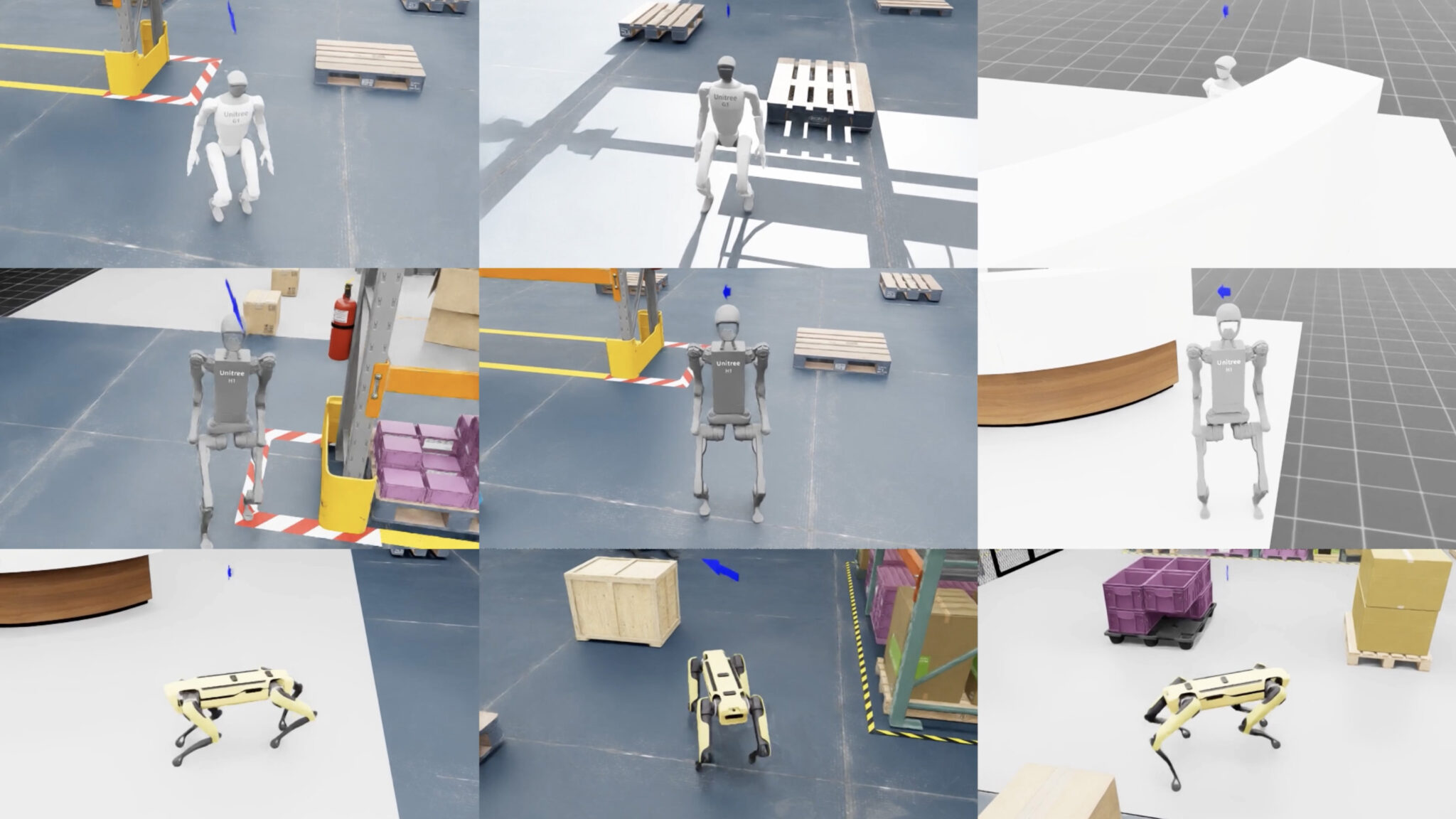
NVIDIA Research recently introduced eight research papers at the International Conference on Robotics and Automation (ICRA) focused on closing the gap between simulation and reality. These studies highlight a shift from scripted automation and controlled demonstrations toward reliable autonomy in complex, unmodeled settings. The research addresses the fundamental challenge of ensuring that policies learned in virtual environments translate effectively to physical hardware. The presented work covers a broad spectrum of robotic capabilities, including multi-arm coordination and the development of policies that can be applied across different robot morphologies. Other papers focus on practical manipulation tasks such as picking novel objects from cluttered environments and performing high-precision assembly operations. These advancements allow developers to create robots that are more versatile and capable of handling diverse physical configurations. One of the significant contributions involves integrating vision-language-action (VLA) models that enable robots to perform reasoning before executing movements. By combining visual perception with linguistic understanding, these models help robots navigate complex instructions and adapt to environmental changes dynamically. This evolution in robotics AI suggests a future where machines can operate with higher levels of reasoning and less manual intervention.
Related tools
Recommended tools for this topic
These picks prioritize high-intent tools relevant to this topic. Some links may include partner or affiliate tracking.
Strong fit for AI, backend, and frontend readers looking for an AI-first coding workflow.
View CursorNatural next step for readers evaluating LLM adoption, APIs, and production inference.
Explore APIA strong fit for readers comparing Claude-class models, safety, and long-context workflows.
View AnthropicComparison
| Aspect | Before / Alternative | After / This |
|---|---|---|
| Programming Method | Manual scripting and hard-coded demonstrations | Large-scale simulation-based reinforcement learning |
| Environment Handling | Controlled lab settings with fixed objects | Dynamic real-world environments with clutter |
| Hardware Portability | Policies tied to specific robotic arms | Generalized policies for diverse robot morphologies |
| Task Execution | Direct action execution without reasoning | Pre-action reasoning via vision-language-action models |
Source: NVIDIA
This page summarizes the original source. Check the source for full details.