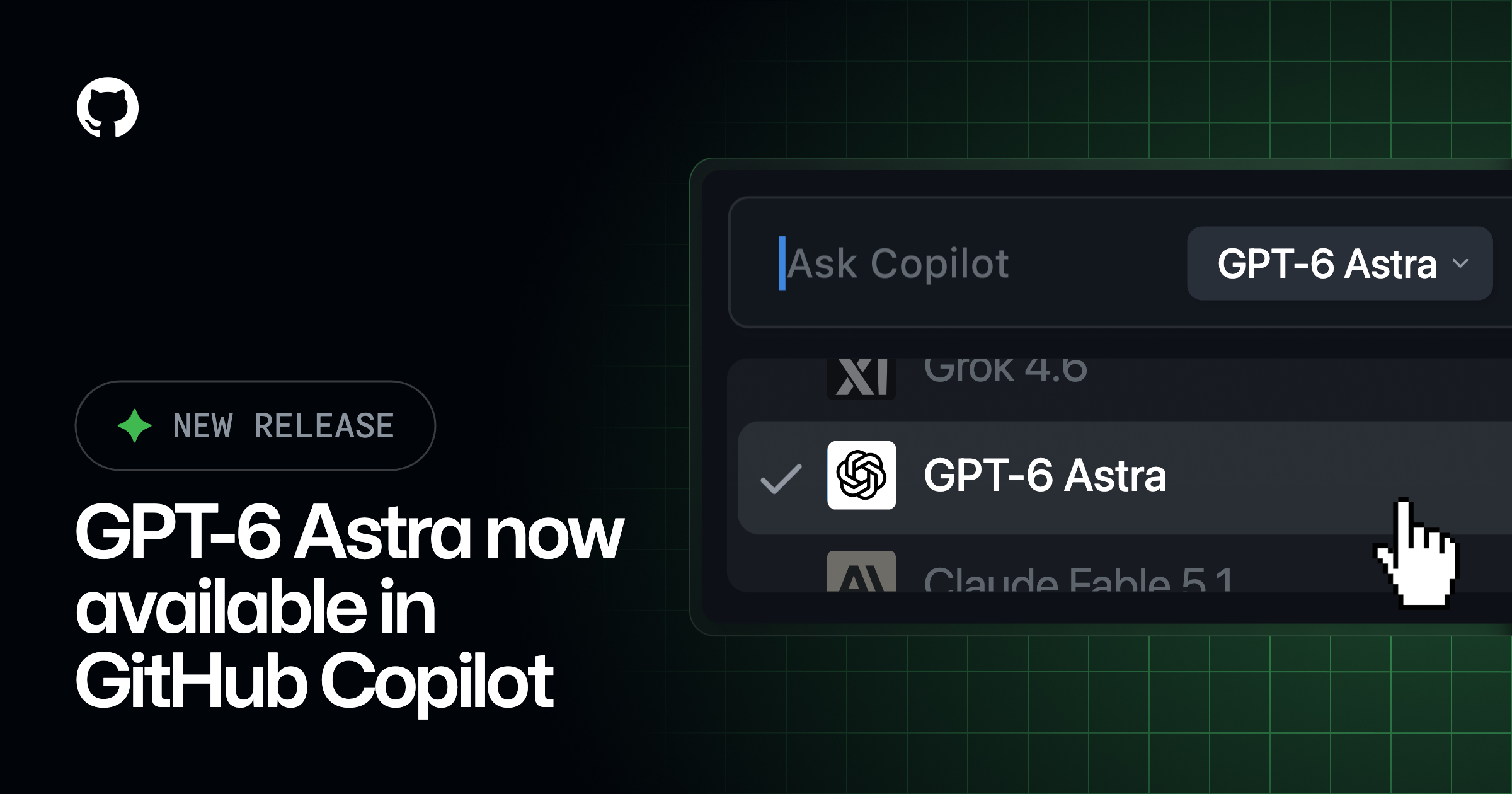
OpenAI Introduces GPT-6 Sol and GPT-6 Luna Models Optimized for Advanced Reasoning and Cost Efficiency
OpenAI has unveiled GPT-6 Sol and GPT-6 Luna, two next-generation AI models designed for autonomous agent operations with vastly improved context processing and lower inference costs.
OpenAI has introduced GPT-6 Sol and GPT-6 Luna, two new models tailored for high-level reasoning and runtime efficiency. These models target autonomous agent workflows, software engineering tasks, and complex research scenarios that require multi-step logical deduction. By optimizing the underlying architecture, OpenAI aims to support more reliable long-context operations and highly repetitive programmatic invocations.
Primary source
Open Hacker News ↗This article summarizes the source. Check the original for full details and conditions.
Comparison
| Aspect | Before / Alternative | After / This |
|---|---|---|
| Primary Focus | Balanced performance with GPT-4o | Diverged optimization between high-capacity reasoning (Sol) and cost reduction (Luna) |
| Context Performance | Degraded recall accuracy over larger token windows | High-fidelity retrieval and analysis across massive contexts (Sol) |
| Inference Cost | Standard GPT-4o API pricing tiers | Up to 60% reduction in API operational costs (Luna) |
| Target Use Case | General conversational and multimodal tasks | Autonomous agents, long-form codebase analysis, and high-throughput production pipelines |
Action Checklist
- Review OpenAI API documentation for Sol and Luna endpoint availability in your specific deployment region. Initial deployment is restricted to specific regional rollouts.
- Evaluate your application workflows to determine if they benefit more from Sol's larger context window or Luna's cost efficiency. Sol is ideal for codebases and complex documents, while Luna is suited for high-frequency APIs.
- Check updated rate limits and token pricing schedules for the new GPT-6 model family. API quotas and pricing details are subject to ongoing updates.